The kitchen connection: Why mood swings start at the table
Does your teen’s mood seem to swing like a pendulum?
One minute they are fine, and the next they are overwhelmed by jitters or a wave of irritability.
While we often blame hormones or school stress, the answer might instead be found in their eating habits.
There is a powerful mind-gut connection that dictates how children feel, think, and react.
It is important for you as a parent to understand how nutrition affects mental health. By making small, nonjudgmental changes to your child’s diet, you can help them find the emotional balance they need to thrive.

The second brain: Why your teen’s gut matters
Many people are surprised to learn that the gut is often called the second brain.
This is because the gut and brain are in constant conversation through the vagus nerve.
How does the nervous system work with the digestive system? Think of it like a two-way highway. The brain sends signals to the gut (like “butterflies” when we are nervous), and the gut sends signals that control mood back to the brain.
In fact, about 95% of your body’s serotonin—the chemical that makes us feel happy and calm—is produced in the gut.
When a teen’s digestive system is inflamed by poor food choices, that highway gets jammed. This can lead to brain fog, fatigue, or a spike in anxiety.

The sugar rollercoaster: Can sugar cause anxiety?
A common question parents ask us at Avery’s House is “Can sugar cause anxiety?”
The short answer is yes—but perhaps not in the way you think.
When a teen consumes high-sugar or highly processed snacks, their blood sugar spikes and then crashes. This crash mimics the symptoms of a panic attack: a racing heart, shakiness, and a feeling of dread.
For a teen who already struggles with worry, their brain misinterprets these physical signals as actual anxiety. Over time, this constant spike-and-crash cycle makes it nearly impossible for them to regulate their emotions.
Instead of focusing on “bad” foods, which can lead to disordered eating, focus on adding “power” foods. The goal is to keep blood sugar stable so the brain stays calm.

Nutrition for mental health: What to add to the plate
When it comes to nutrition for mental health, it’s not about restrictive dieting. It’s about fueling the brain.
Foods that reduce anxiety and depression work by lowering inflammation and providing the raw materials the brain needs to stay healthy.
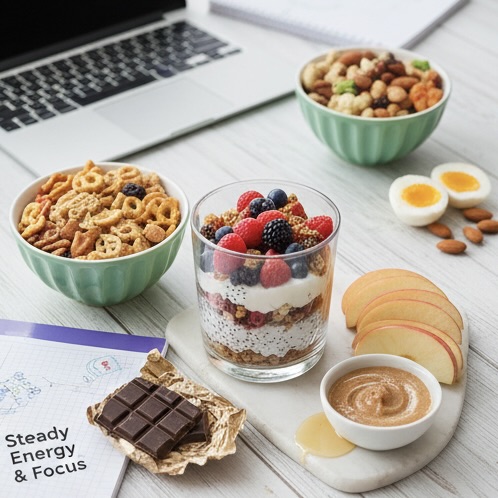
- Magnesium-rich greens: Spinach and kale help relax the muscles and the nervous system.
- Healthy fats (omega-3s): These are found in salmon, walnuts, and chia seeds. They act like lubricant for brain cells, helping them send signals more clearly.
- Complex carbs: Think oats, sweet potatoes, and brown rice. These digest slowly, providing a steady stream of energy rather than a sugar spike.
- Probiotic-rich foods: Yogurt, kefir, or kombucha help build the “good” bacteria in the gut, strengthening the mind-gut connection.
\
Practical tips: Easy recipes for teens
We all know that parenting teens means dealing with busy schedules and picky appetites.
To help your teen take ownership of their health, try introducing these easy recipes that focus on brain fuel:
- The “focus” smoothie: Blend a handful of spinach, a frozen banana, a spoonful of peanut butter, and some Greek yogurt. It tastes like a milkshake but supports the mind-gut connection.
- Overnight peace oats: Mix in a jar equal parts oats and milk (or a dairy alternative). Add a few blueberries and let it sit in the refrigerator overnight. This is a grab-and-go breakfast that prevents a mid-morning sugar crash.
- Sheet-pan brain boost: Roast chicken strips with broccoli and sweet potatoes in olive oil. It’s simple, filling, and packed with nutrition for mental health.

How does nutrition affect mental health in the long run?
How does nutrition affect mental health over months or years?
During the teen years, the brain is undergoing a massive remodeling phase. The quality of the building materials provided by a teen’s diet determines how resilient their brain will be against future stress.
Consistently eating foods that reduce anxiety and depression builds a stronger nervous system. Over time, a brain fueled by high-quality nutrition becomes better at
- Emotional resilience: The ability to bounce back after a disappointment or a fight with a friend.
- Cognitive flexibility: Being able to solve problems and think clearly even when under stress.
- Sleep regulation: Regulation of melatonin, the hormone that allows the brain to shut down and rest deeply at night.
On the other hand, a long-term diet high in processed sugars can lead to chronic micro-inflammation. This can wear down the mind-gut connection over time, leaving a teen feeling on edge or physically exhausted even when they haven’t been active.
By prioritizing nutrition for mental health now, you are giving your teen a biological advantage that will follow them into adulthood.

The brain and belly connection log
Want to see the mind-gut connection for yourself?
Have your teen use this tracker for three days to see how the food they eat changes the way they feel.
Remember: This isn’t about dieting. It’s intended to help teens find out which foods make them feel like the best versions of themselves!
| Time of day | What did I eat/drink? | How do I feel 1 hour later? | My energy level (1-10) |
| Breakfast | Example: Sugary cereal | Example: Jittery, then tired | 3/10 |
| Lunch | |||
| Afternoon snack | |||
| Dinner |
The “gut check” questions
At the end of each day, ask your teen these three questions:
- The focus check: Was it easy or hard to focus on your homework today?
- The mood check: Did you feel snappy or annoyed for no reason?
- The sleep check: Did you feel wired but tired when you climbed into bed?
How to use this tracker with your teen
If you notice a pattern—like your son feeling extra anxious after an energy drink or a high-sugar snack—don’t lecture.
Instead, point out the mind-gut connection as an interesting fact.
“I noticed that on Tuesday when you had the protein smoothie, you said your energy was an 8/10 all afternoon. That’s pretty cool—it looks like your brain really likes that fuel.”

The “add for power” kitchen contract
Once you and your teen have noticed connections between foods and moods, consider keeping the focus positive by developing some healthy eating guidelines you can both use.
This is not a list of foods you can’t eat.
Instead, it is an agreement meant to help you and your teen get the fuel you need to feel good.
The goal: To use food to help your moods stay steady and your brains stay sharp.
- The “plus one” rule: Every time I have a sugary snack, I will add a “power food” (like a handful of nuts or a piece of fruit) to help my blood sugar stay level.
- Hydration station: I will drink one full glass of water for every soda or energy drink I have.
- The 10-minute check: If I feel hangry or super annoyed, I will try a small protein snack (like a cheese stick or yogurt) and wait 10 minutes before deciding if I’m still upset.
- No-shame zone: We won’t use words like bad, guilty, or junk. We will talk about food as slow-burning fuel or fast-burning fuel.
Signed: ____________________ (Teen) Signed: ____________________ (Parent)
Remember, however, that nutrition is just one piece of the puzzle. If your teen is already in survival mode or a chronic shut down, a change in diet alone may not be enough. They may need professional support to help their nervous system learn how to feel safe again.

The path to healing at Avery’s House
At Avery’s House, we take a whole-person approach to teen wellness.
We understand that mental health isn’t just “in the head”—it’s in the body, the gut, and the environment.
While we work with teens to develop healthy coping skills and emotional literacy, we also educate families on how to support their teen’s physical well-being.
By calming the gut, we can help calm the mind.
If your teen’s mood swings are impacting their ability to live a happy life, we’re here to help.
Contact Avery’s House today to learn more about our holistic approach to teen mental health.
