When “take a deep breath” isn’t enough: The reality of the neurodivergent brain
If you have a teenager with ADHD or autism, you’ve probably tried the standard advice for anxiety. You’ve suggested deep breathing, thinking positive, or just pushing through a difficult social event.
But for many neurodivergent kids, these traditional coping skills don’t just fail—they make things worse.
When a teen has a brain that processes the world differently, their anxiety isn’t always a result of worried thoughts. Often, it’s a physical reaction to a world that is too loud, too bright, or too fast.
This is the intersection of ADHD and anxiety or autism and teen depression. When a teen’s nervous system is constantly stuck in red alert because of sensory input, they eventually hit a wall.
At Avery’s House, we see this often. It’s called neurodivergent burnout in teens. It’s a total exhaustion of the brain’s ability to cope. To help these teens, we have to move past standard talk therapy and start looking at the world through a sensory lens.

Understanding neurodivergent burnout in teens
Burnout for a neurodivergent teen looks different than typical stress.
It happens when the cost of existing in a neurotypical world becomes too high.
Imagine trying to finish a complex math test in a shirt made of sandpaper while a siren blares in your ear. That’s how a regular school day can feel for someone with sensory processing differences.
Over time, the constant strain leads to
- Loss of skills: A teen who used to handle their own laundry or homework suddenly can’t.
- Increased meltdowns or shutdowns: They may become highly irritable or totally silent and unresponsive.
- Chronic exhaustion: No amount of sleep seems to fix the tired they feel in their soul.
- Physical illness: Constant headaches or stomach issues that appear on school mornings.
If this sounds like your child, they aren’t just being difficult. They may be experiencing a combination of ADHD or autism and teen depression triggered by a depleted nervous system. Their brain has simply run out of the energy required to mask or adapt.

Why traditional coping skills can backfire
Most traditional mental health tools are designed for top-down regulation—using your thoughts to calm your body.
But neurodivergent teens often need bottom-up regulation—using the body to calm the brain.
- Deep breathing: For some, focusing on the sensation of breath can actually trigger interoceptive anxiety (feeling too much of what’s happening inside the body).
- Eye contact in therapy: Forcing a teen to maintain eye contact while discussing trauma can be so sensory-overwhelming that they can’t even process the conversation.
- Positive reframing: Telling a teen to look on the bright side of a loud cafeteria doesn’t change the fact that the noise is physically painful to their ears.
Instead of trying to change how the teen thinks about the environment, we must focus on sensory regulation. We need to change how the environment impacts their body.
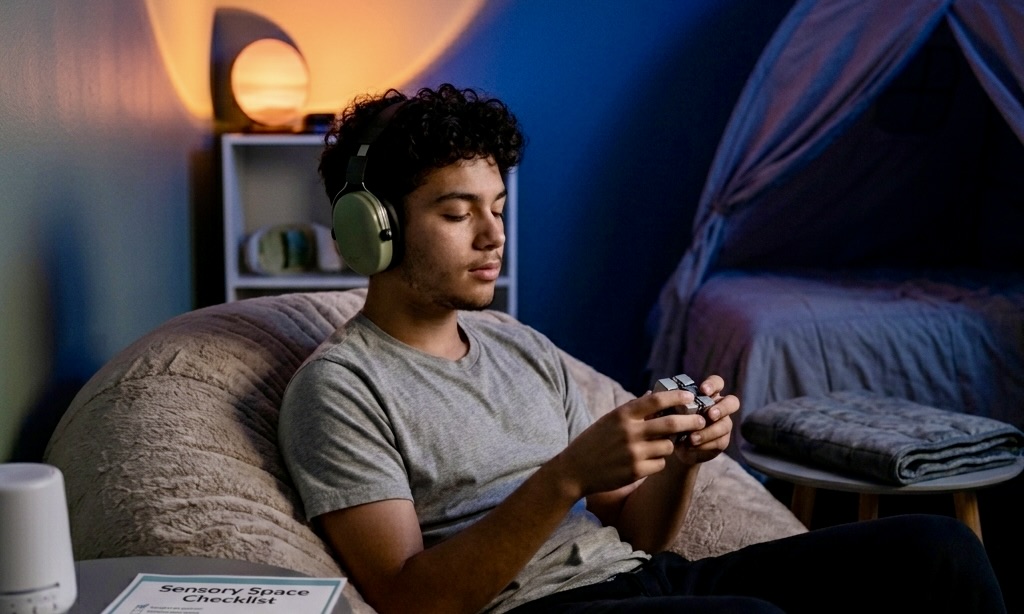
Sensory regulation for teens: A wellness checklist for parents
Helping a neurodivergent teen recover from burnout requires a shift in strategy.
Instead of pushing for more productivity, focus on regulation. Use this checklist to help your teen lower their sensory load at home:
- Implement low-demand periods: Create blocks of time after school where there are zero expectations. No chores, no “How was your day?” questions. Just time for them to exist in a safe space.
- Audit the auditory: If your teen is struggling with ADHD and anxiety, the hum of the refrigerator or a sibling’s TV might be the tipping point. Invest in high-quality noise-canceling headphones.
- Use heavy work: Proprioceptive input (pressure on joints and muscles) is incredibly grounding. Pushing against a wall, wearing a weighted vest, or even crunchy snacks can help regulate the nervous system.
- Dim the world: Swap bright overhead LEDs for warm lamps or fairy lights. Visual clutter can be just as exhausting as noise.
- Respect the stims: Rocking, pacing, or fidgeting are not distractions—they are the brain’s way of self-soothing. Encourage these movements rather than asking the teen to sit still.
By focusing on these physical needs, you reduce the underlying noise in their brain, making it easier for them to engage in higher-level healing.
Moving from burnout to balance
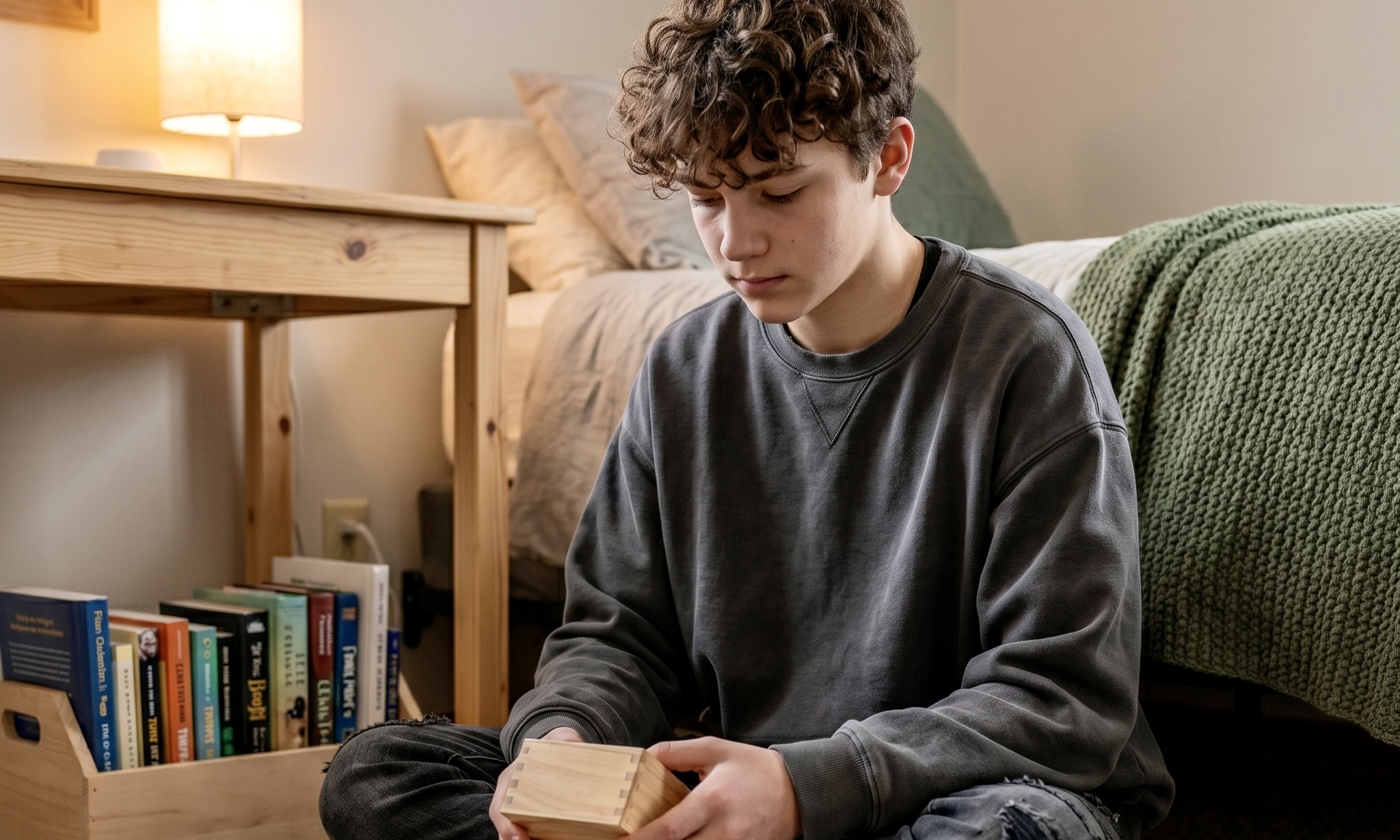
When a teen is in the middle of a burnout cycle, they may need more support than a weekly therapy session can provide. Because their needs are so specific, a standard environment can sometimes feel like more of the same pressure.
Our residential neurodiversity-affirming program for teens offers intensive support in a setting that understands sensory needs. We don’t just ask teens to talk. We help them learn to listen to their bodies and advocate for what they need to stay regulated.
Healing also involves the whole family. Learning to distinguish between behavioral and sensory issues is a huge part of the journey. Our family therapy offers resources for parents who want to stop the cycle of conflict and start building a home that feels like a sanctuary for their neurodivergent teen.

Finding a sensory-safe path forward
Your teen isn’t broken, and they aren’t failing at therapy.
They may just be using tools that weren’t built for their specific brain.
By embracing sensory regulation strategies, you are giving them permission to be who they are while giving them the tools to navigate a loud world.
If you’re seeing signs of neurodivergent burnout in your teen, or if you feel like your current approach isn’t reaching the heart of the issue, we’re here to help.
Contact Avery’s House today to speak with a specialist who understands the beautiful complexity of the neurodivergent brain. Let’s work together to lower the load and bring back your teen’s spark.