Understanding your teen’s brain wiring
Is ADHD Neurodivergent?
When your child receives an attention-deficit/hyperactivity disorder diagnosis, you may feel overwhelmed. Clinical terms often focus on what’s missing or deficient. But modern medicine is experiencing a powerful shift in perspective.
Specialists have been asking, Is ADHD neurodivergent or neurotypical? They now understand ADHD as a natural variation in human brain development.
Is ADHD neurodivergent?
The short answer is yes. ADHD is now generally recognized as a form of neurodivergence.
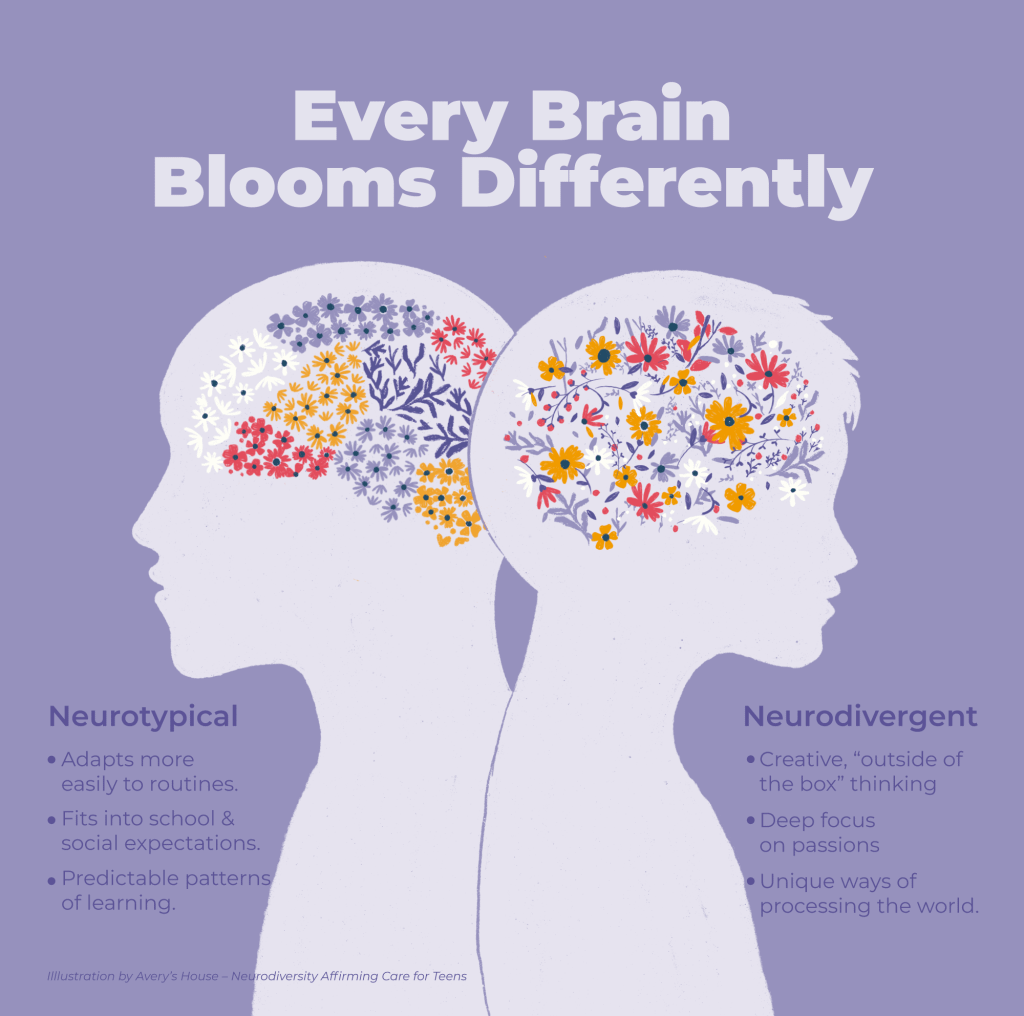
Why is ADHD considered neurodivergent? Neurodiversity means that there is no single, “correct” way for a human brain to process information. Just as we have natural diversity in height, eye color, and personality, we have diversity in how our nervous systems interact with the world.
A teen with ADHD is not broken, and it’s not that they don’t try hard enough. Their brain is simply wired differently than a neurotypical brain. Understanding this distinction is the key to helping them thrive in a world that isn’t always built for their specific style of thinking.
Defining the differences
Someone who is neurotypical has a brain that processes information, manages emotions, and controls impulses in ways that match society’s standard expectations.
Using this definition, is someone with ADHD neurodivergent? Yes.
Research shows that the ADHD brain has distinct structural and chemical differences, particularly in how it manages dopamine, the chemical responsible for motivation, reward, and attention.
This unique neurobiology means that an individual with ADHD experiences life through a different set of filters.
They belong to a broad community of individuals whose minds operate outside the standard baseline. This community includes people with autism, dyslexia, and dyscalculia.
Recognizing that your teen is neurodivergent helps shift the conversation from “fixing a problem” to “supporting a unique learning and processing style.”
Exploring the neurodivergent spectrum: Where does ADHD fit?
Parents frequently wonder, Is ADHD on the neurodivergent spectrum? While people often use the word spectrum to refer exclusively to autism, the term actually applies to the entire universe of neurodiversity. ADHD sits firmly on this broad spectrum of brain differences.
In fact, clinical data reveal that ADHD and autism share many genetic traits and brain pathways. It is incredibly common for a teenager to have both profiles simultaneously. Whether your teen has ADHD alone or a combination of traits, they are navigating the world with a nervous system that requires specific, tailored tools for success.
The modern science of ADHD: Executive dysfunction and RSD
To understand why ADHD is considered neurodivergent from a modern clinical perspective, we have to look past hyperactivity. Current psychiatric research highlights two major concepts that deeply impact a teenager’s daily life: executive dysfunction and rejection sensitive dysphoria (RSD).
Understanding executive dysfunction
Executive functions are the brain’s management skills. They help us plan, organize, remember details, and start tasks.
In a neurodivergent ADHD brain, the executive system develops on its own timeline. This is not a lack of willpower. Your teen might desperately want to clean their room or start their essay, but their brain struggles to send the physical “go” signal.
The reality of rejection sensitive dysphoria
A 2026 study sheds new light on how emotional dysregulation affects individuals with ADHD. The research confirms that teens with ADHD often experience an intense, overwhelming emotional response called rejection sensitive dysphoria.
RSD causes physical distress in response to perceived or real criticism, failure, or rejection. Young people cope with this intense feeling in three main ways:
- Somatic pain: RSD is a full-body experience, causing physical symptoms like chest tightness, nausea, or a racing heart when a teen fears they have let someone down.
- The masking paradox: Teens may aggressively camouflage their vulnerability behind a “mask of toughness” to appear unfazed, which can hide their true struggles from parents and teachers.
- Preemptive withdrawal: To avoid the pain of failure, a teen might suddenly stop trying in school, drop out of sports, or isolate themselves from friends.
When a neurotypical world leads to secondary mental health issues
When a neurodivergent teenager spends years trying to force themselves into a neurotypical mold, the strain takes a toll. Constantly masking their struggles and fighting executive dysfunction without the right support can lead to severe burnout.
Over time, this chronic stress can trigger secondary mental health crises:
- Severe anxiety: Worrying about forgetting tasks or making social mistakes.
- Depression and apathy: Feeling hopeless after being told they aren’t living up to their potential.
- Identity confusion: Losing touch with their authentic selves because they’re working so hard to blend in.
When these secondary challenges appear, traditional talk therapy that tells a teen to change their thoughts is rarely enough. They need an environment that understands their underlying neurodivergence.
Discovering a soft landing: The NEST program at Avery’s House
If your teenager is exhausted from trying to fit into a system that doesn’t understand their brain, they don’t have to navigate this journey alone. We recognize both the scientific reality and the beautiful potential of the neurodivergent mind. We know that with the right environment, your teen’s creativity, hyper-focus, and empathy can truly shine.
Our innovative NEST Neurodivergent Teen Program is designed for adolescents who are navigating ADHD alongside secondary mental health challenges like anxiety or depression.
The NEST provides a clinically rigorous treatment space distinct from traditional compliance-based models. We focus on nervous system regulation, self-advocacy, and emotional validation.
We combine advanced clinical practices with a warm, strengths-based approach. We help your teen strip away the painful masks of perfectionism and withdrawal, allowing them to discover who they are in a safe, judgment-free sanctuary.
Building a bridge to understanding
Your teen’s ADHD brain is a unique variation of the human experience, full of deep capability and spark. They simply need a map designed for their specific terrain.
Contact Avery’s House today to learn more about our NEST program. Let’s talk about how we can support your teen’s mental health while honoring exactly how their beautiful mind is wired.