When “I don’t care” becomes a lifestyle
You check their grades and see a string of C-minuses.
You ask how school was, and you get a shrug.
They aren’t failing, but they aren’t trying either. The spark is gone. They are physically present in class, but mentally, they checked out months ago.
You might be tempted to call it laziness, but a new term for this phenomenon describes it perfectly: quiet quitting.
A workplace trend in which employees decided to do the bare minimum to keep their jobs, this concept has recently migrated to the classroom.
For many teens, quiet quitting—sometimes referred to as silent quitting or soft quitting—is not an act of rebellion. It’s an act of self-preservation. It’s a sign that your teen has considered the pressure of school and decided to simply stop engaging.

What is quiet quitting in an academic context?
In school, quiet quitting is a conscious decision to reject the “hustle culture” of competitive academics.
It involves doing just enough to pass and refusing to do more. It means no raising hands, no extra credit, and no emotional investment in the outcome.
While setting boundaries is healthy, adopting this attitude often signals a problem.
It is frequently a symptom of school burnout—a state of chronic physical and emotional exhaustion.
As researchers from Stanford University’s Challenge Success program have noted, the relentless pressure to achieve is leading to high rates of disengagement among students who feel the “game” of school is impossible to win.
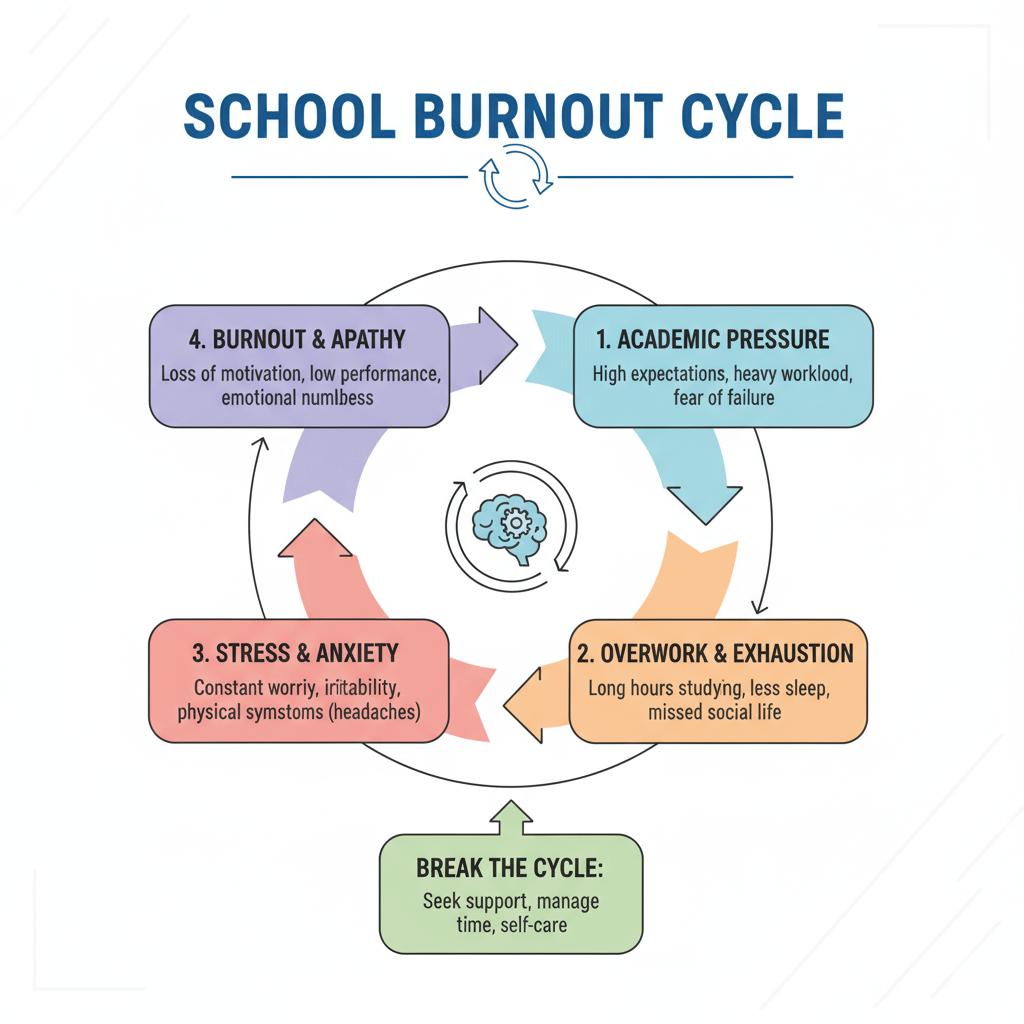
The hidden drivers: Why teens disengage
When a bright, capable teen does the bare minimum, it’s rarely because they don’t care about their future. Instead, they are likely overwhelmed by their present.
Here are some common drivers of such disengagement:
- School burnout: If your teen feels that no matter how hard they work, it will never be enough, they may decide that trying is pointless. Disengaging from this academic pressure is a way to protect their energy.
- School anxiety: For a teen with high anxiety, the fear of failure can be paralyzing. It feels safer to not try and get a C than to try hard and potentially fail. School anxiety can make the classroom feel like a minefield, leading to emotional withdrawal.
- Depression (the “why bother?” factor): A hallmark of depression is apathy—a loss of interest in activities and a sense of hopelessness. If your teen is struggling with depression, quiet quitting likely isn’t a choice but a symptom. They aren’t refusing to work; they simply cannot summon the energy to care.

From disengaged to reconnected: Strategies for parents
Seeing your child drift through their education is painful.
Your instinct might be to push harder, hire tutors, or take away privileges.
However, if the root cause is burnout or mental health struggles, increasing the pressure will only cause them to shut down further.
Here is how to help them reconnect:
- Shift the focus from grades to learning: Stop asking about the test score and start asking about the subject. “Did you learn anything interesting today?” or “What was the most boring part of class?” This signals that you care about them, not just their output.
- Validate the burnout: Acknowledge their stress. Say, “I see how exhausted you are. It makes sense that you want to step back.” When a teen feels heard, they often feel safe enough to re-engage.
- Identify the “why”: Is your child’s soft quitting a way to manage stress, or is it a sign they are feeling numb? If they express feelings of worthlessness or persistent sadness, this goes beyond schoolwork. According to the Centers for Disease Control, such feelings in teens are at record highs, making it vital to distinguish between academic boredom and a mental health crisis.
- Encourage purpose outside school: Help them find something—anything—that lights them up without being graded. A hobby, a volunteer gig, or a creative outlet can restore their sense of purpose and energy, which often spills over into their school life.

When to seek professional support
If your teen’s disengagement is accompanied by withdrawal from friends, changes in sleep or appetite, or a flat mood, quiet quitting may be masking a more serious issue.
At Avery’s House, we look beneath the behavior to find the root cause. Whether it’s treating the underlying depression stealing their motivation or helping them manage anxiety without shutting down, we help teens find their spark again.
We don’t just want them to get good grades; we want them to have a good life.
You don’t have to watch your teen fade into the background.
Contact Avery’s House today to learn how we can help your teen move from surviving to thriving.
