Discovering alternative paths to emotional recovery for teenagers
Searching for out-of-home support for a struggling teenager can quickly feel overwhelming. School counselors, social workers, and court staff often use terms like group home and residential treatment center as if they mean the same thing. While both options give teens a structured place to live away from home, they have very different goals and levels of therapy.
Learning the difference between these options is key to making the best choice for your child. Once you understand how each program works day-to-day, your family can easily pick the setting that best matches your teen’s emotional and behavioral needs.

What is a group home?
A group home is a shared house that provides a safe, structured place to live for teens who need a stable home environment. These programs focus on teaching daily life skills, getting along with others, and building good habits. Teens who live in a group home usually go to local public schools and see a therapist nearby in the community when needed.
Group homes are often meant for longer stays and may be set up through community organizations or social services. They help teens follow a predictable daily routine and learn how to be responsible, but they don’t provide intensive medical care or on-site therapy.

What is residential treatment?
A residential treatment center is a licensed medical facility made for teens facing serious emotional, behavioral, or mental health struggles. In this setting, your teenager’s entire day centers on therapy, healing, and learning how to handle tough emotions. A team of licensed therapists, doctors, and psychiatrists provides care and support around the clock.
Residential programs offer a safe space where teens can temporarily step away from daily stress and social triggers. They include on-site school support, daily individual and group therapy, and family counseling so everyone can heal together.
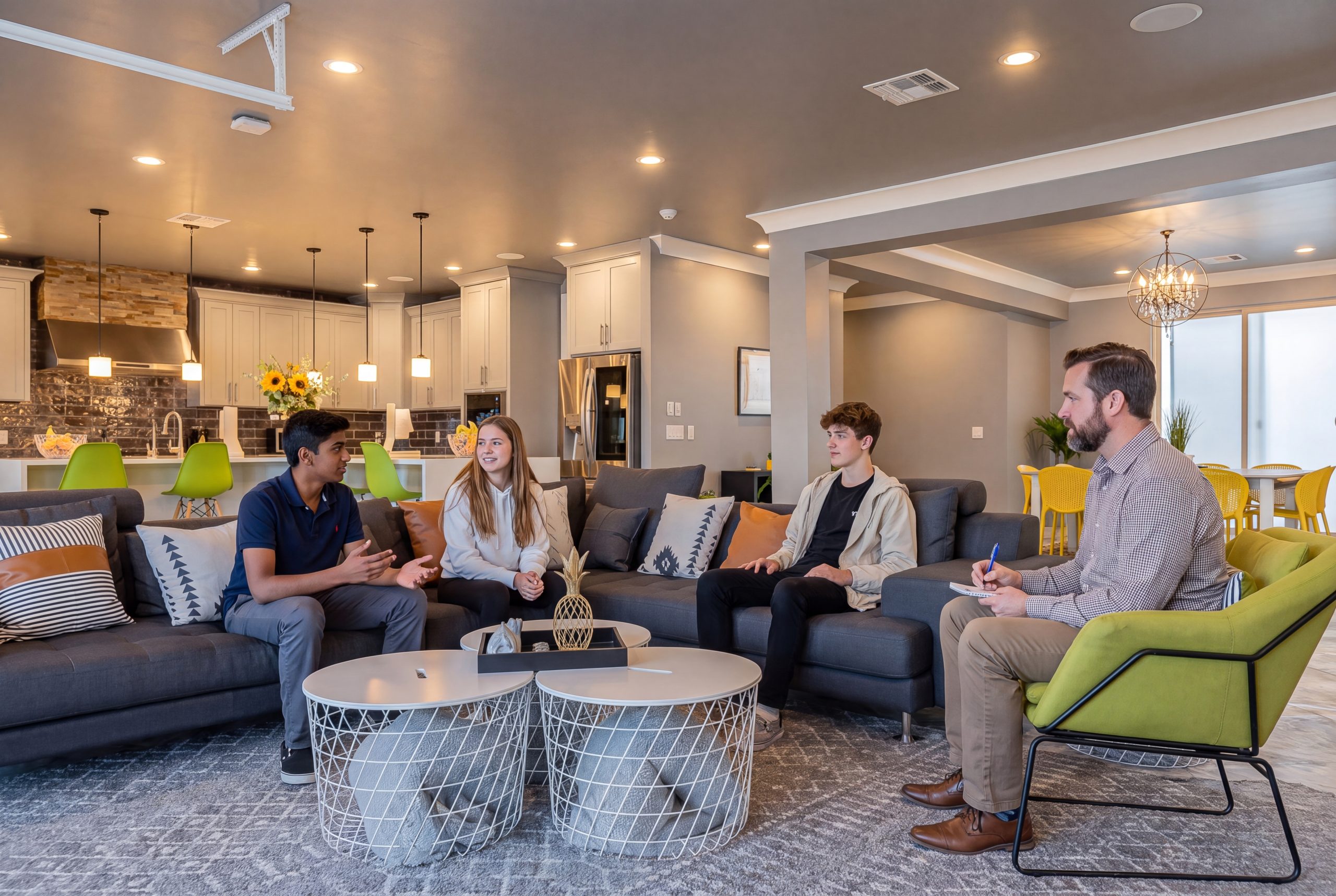
Key differences at a glance
To help you compare these two levels of care, here’s an overview of how standard group homes and residential treatment centers operate:
| Group Home | Residential Treatment | |
|---|---|---|
| Primary focus | Supervised living, healthy routines, and life skills | Clinical care to help stabilize a teen’s mood and emotions |
| Clinical therapy | Outpatient or weekly community-based therapy | Daily individual, group, and specialized therapies on site |
| Family involvement | Varies but often basic visitation | Integrated family therapy and parent education programs |
| Academic support | Enrollment in local public schools | On-site accredited education tailored to the teen’s needs |
| Length of stay | Often long-term (6 to 12+ months) | Typically short-to-medium term (30 to 90 days) |

How to decide which option fits your teenager
To figure out which program is the right fit for your teenager, ask yourself these simple questions:
- What kind of mental health support does my teen need? Think about whether your child needs daily treatment with a professional therapist and doctor, or if they just need a safe, structured daily routine.
- Is my teen safe at their current school and around the neighborhood? Consider if staying in their local school and community causes safety concerns or too much stress.
- How important is family counseling right now? Decide if your family needs regular, hands-on therapy together to improve relationships and create a supportive home.
- Has weekly therapy stopped working? Look at whether regular counseling sessions are no longer enough to help with your child’s challenges.

Finding the right level of care
If you’re looking for a place for your teenager near Mesa and know they need real therapy, Avery’s House is here to help. We offer accredited programs focused on daily therapy, peer support, and family healing.
We’re a warm, homelike alternative to traditional group homes, giving teens professional care around the clock. Our goal is to teach your child how to manage tough feelings so they can safely return home to you and their community.