The big shift: Why the jump to ninth grade feels so overwhelming
The jump from eighth to ninth grade is called the big shift, and for good reason.
For many teenagers, walking onto a high school campus for the first time feels like entering a completely different world. The hallways are bigger, the classes are harder, and the social hierarchy feels more intense.
While we often focus on buying the right school supplies, the biggest challenge for many students is the emotional toll of freshman year anxiety.
As a parent, you might see your once-confident middle schooler suddenly become withdrawn or irritable.
You might notice them worrying about things they never cared about before, like who they sit with at lunch or whether they are good enough for the honors track.
At Avery’s House, we know that ninth grade mental health is the foundation for the rest of a student’s high school experience. Understanding how to navigate this transition can help your teen move from surviving to thriving.

The hidden weight of the high school transition
In middle school, your teen was likely a big fish in a small pond. They knew the teachers, the rules, and their place in the social circle.
In high school, that safety net disappears. Suddenly, they are at the bottom of a four-year ladder, surrounded by older students and facing a much heavier workload.
This shift explains the sudden jump in teen social fear in high school.
New high schoolers don’t just worry about their grades. They worry about fitting in as the rules of friendship rapidly change. This pressure can be exhausting. When a teen’s brain is constantly scanning for social threats, they have less energy for algebra or biology.
If this stress isn’t managed, it can lead to school refusal freshman year. The anxiety of facing the day can become so great that teens physically cannot bring themselves to go to school.
If you’re seeing signs that the workload is becoming too much for your freshman, we have specific advice on how to manage academic pressure.
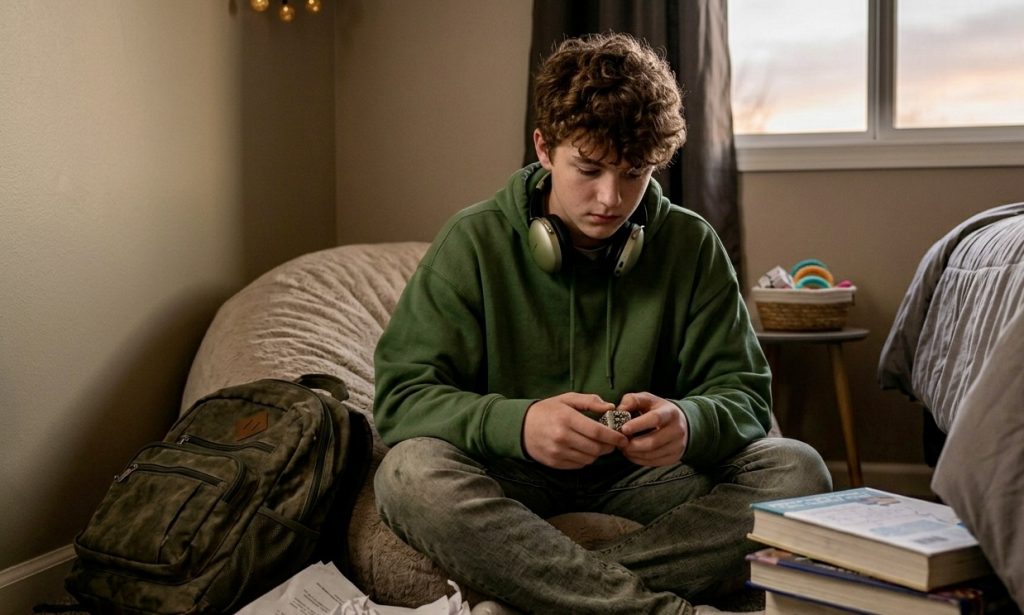
Spotting the signs that your freshman is struggling
It’s normal for a teen to be a little nervous during the first few weeks at a new school. However, if the first-day jitters don’t fade away, it might be a sign of a deeper struggle with freshman year anxiety.
Look for these red flags during the first semester:
- Physical symptoms: Complaints of headaches, stomachaches, or nausea, especially on Sunday nights or Monday mornings.
- Sleep changes: Staying up too late due to workload or having trouble falling asleep because their mind won’t stop racing.
- Emotional outbursts: Crying over small assignments or becoming unusually angry when asked about their day.
- Social withdrawal: Quitting clubs or sports they used to love or spending all their time in their room to avoid real-world social pressure.
- The Sunday scaries: A visible shift in mood every weekend as Monday morning approaches.
If your teen is experiencing these symptoms, they aren’t being difficult. Their nervous system is simply overwhelmed by the scale of the change.

High school transition tips for parents: A roadmap for success
You can’t take classes for your child, but you can be the anchor that keeps them grounded when the high school waters get choppy. Use this checklist to provide the support they need:
- Prioritize connection over correction: When they come home, ask about their lunch or their favorite part of the day before asking about their test scores. Let them know home is a judgment-free zone.
- Normalize the struggle: Share a story about a time you felt out of place or overwhelmed by a big change. Knowing that everyone feels this way can lower their shame.
- Validate the social fear: Instead of saying “just be yourself,” say, “I know it feels high-pressure to find your group right now. It takes time to find your people.”
- Create a soft landing: Keep evening routines simple. Avoid piling on extra chores or family demands during the first few months of ninth grade.
- Set realistic academic goals: Remind them that it’s okay to ask for help or even scale back a schedule if it’s hurting their mental health.

When the transition needs more than a pep talk
Sometimes, despite a parent’s best efforts, the weight of high school becomes too much for a teen to carry alone.
If you see your teen spiraling into depression or persistent social fear, or if they suddenly engage in school refusal freshman year, it may be time for professional support.
At Avery’s House, our virtual programs meet teens where they are.
We help them build the social and emotional muscles they need to handle the pressure of high school without losing their sense of self. We provide a space where they can be heard, validated, and equipped with real-world tools for regulation.

Helping your family find a fresh start
The transition to high school is a marathon, not a sprint. It takes time for a teen to find their footing, and it’s okay if there are some stumbles along the way.
Your support is the most powerful tool your teen has.
If you’re worried about your teen’s transition or if the anxiety has become more than you can manage at home, you don’t have to wait for things to get worse.
Contact Avery’s House today to talk with a specialist who understands the unique pressures of the high school jump. We’re here to help your teen find their confidence and help your family heal together.
