The 3:00 p.m. wall: Why your teen crashes after school
If you have a neurodivergent teen, you’ve likely seen the so-called 3:00 p.m. wall.
They walk through the front door after a long day of school, and within minutes, the house feels tense. Maybe they’re snapping at their siblings, retreating into a dark room, or becoming defiant when asked about their homework.
As a parent, you may see these moments as behavioral issues. However, for a teen with ADHD, autism, or sensory processing differences, these aren’t just bad moods. They’re often the result of sensory overload.
Throughout the day, your teen’s brain has been bombarded by humming fluorescent lights, crowded hallways, itchy clothing tags, and the constant pressure of social transitions.
By the time they get home, their stress cup is overflowing. They don’t need a lecture. They need a place to pour that stress out.
While some families dream of a professional-grade sensory room, you don’t need a dedicated, high-tech renovated space to help your teen regulate. A sensory space—even just a small, calm corner—can be a reset zone that changes the entire energy of your home.

Regulation, not punishment: The purpose of a sensory space
The most important thing to understand is that a sensory space is not a time-out corner. It’s a tool for autonomy.
When a teen is forced into a space as a punishment, their nervous system stays in “fight or flight” mode. But when they choose to go to their calm corner because they recognize they are feeling overwhelmed, they are practicing a vital life skill: self-regulation.
The goal of this sensory-friendly space isn’t perfect calm. It’s about
- Reducing overwhelm: Giving the brain a break from input.
- Speeding up recovery: Helping the nervous system return to baseline.
- Supporting autonomy: Letting the teen decide what they need to feel safe.
If you’re just beginning to learn about how your teen’s brain processes the world, check out our guide on understanding neurodivergent teens. It offers a deeper look into why these sensory supports are so life-changing.

Designing a sensory-friendly bedroom or corner
You don’t need a massive budget to create an effective sensory space.
Most of the time, less is more. A cluttered room can actually add to the sensory load. Focus on these four main inputs when setting up the area:
1. Visual comfort (lighting)
Fluorescent overhead lights are often the enemy of a regulated nervous system.
- The goal: Soft, indirect, or adjustable light.
- The fix: Use floor lamps with warm bulbs, LED strips where your teen can change the color (blue and green are often calming), or blackout curtains to create a cave-like effect if they need total darkness.
2. Auditory peace (sound)
For many neurodivergent teens, quiet isn’t actually quiet—they can still hear the refrigerator buzzing or the neighbors talking.
- The goal: Control over the soundscape.
- The fix: Noise-canceling headphones are often helpful. You can also provide a white noise machine or a fan to create a consistent background hum that masks unpredictable house noises.
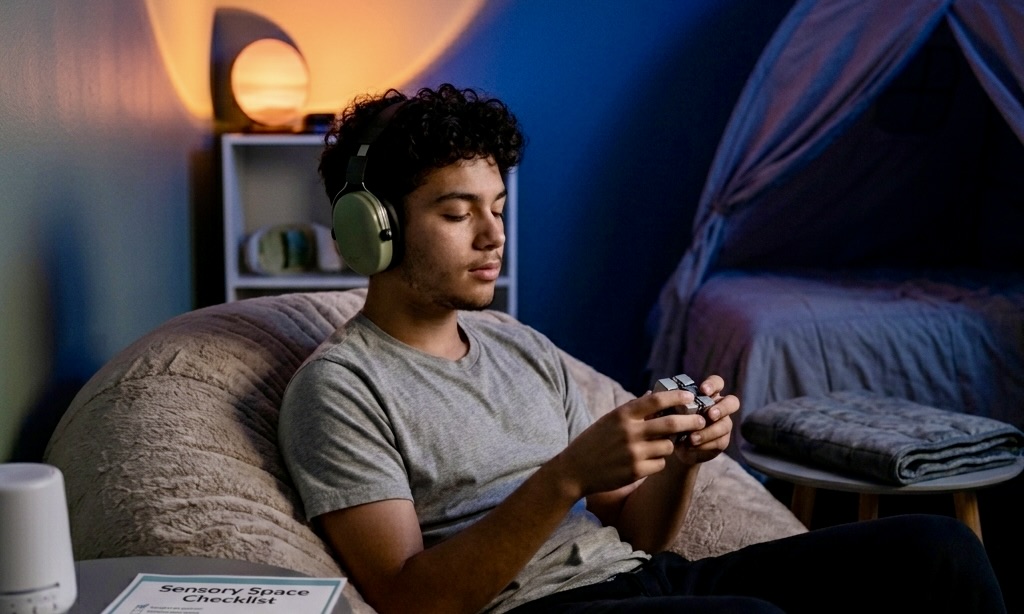
3. Tactile grounding (touch and pressure)
This is often the most important part of a sensory corner. Proprioceptive input (pressure on the joints and muscles) tells the brain where the body is in space, which is incredibly grounding.
- The goal: Deep pressure and comfortable textures.
- The fix: A weighted blanket, a bean bag chair that hugs the body, and high-quality fidget tools.
4. Proprioceptive and vestibular input (movement)
Sometimes, calm doesn’t mean sitting still. Some teens need to move to regulate.
- The goal: Safe, rhythmic movement.
- The fix: A rocking chair, a yoga ball to bounce on, or even just a heavy floor pillow they can punch or squeeze.
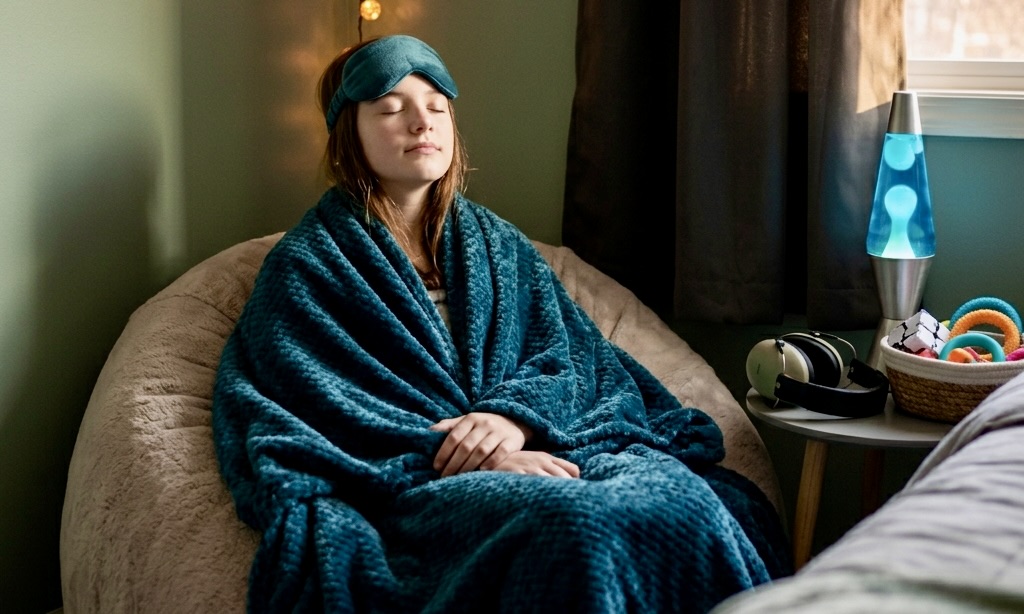
The setup checklist (screenshot this!)
Ready to build? Use this checklist to make sure the space is functional and teen-approved.
- [ ] Consult the expert: Ask your teen where they feel most overwhelmed and where they feel safest. See our guide below.
- [ ] Choose the spot: Pick a low-traffic area (a corner of their bedroom or a quiet nook in a den).
- [ ] Clear the clutter: Remove extra “visual noise” like piles of clothes or bright posters that might be too much during a meltdown.
- [ ] Test the input: Sit in the space yourself. Can you hear the TV from the other room? Is the light too sharp?
- [ ] Check accessibility: Make sure their headphones and fidgets are always in the same spot so your teen won’t have to hunt for them when they’re stressed.
- [ ] Make it mask free: Remind your teen that this is a space where they don’t have to act any certain way.
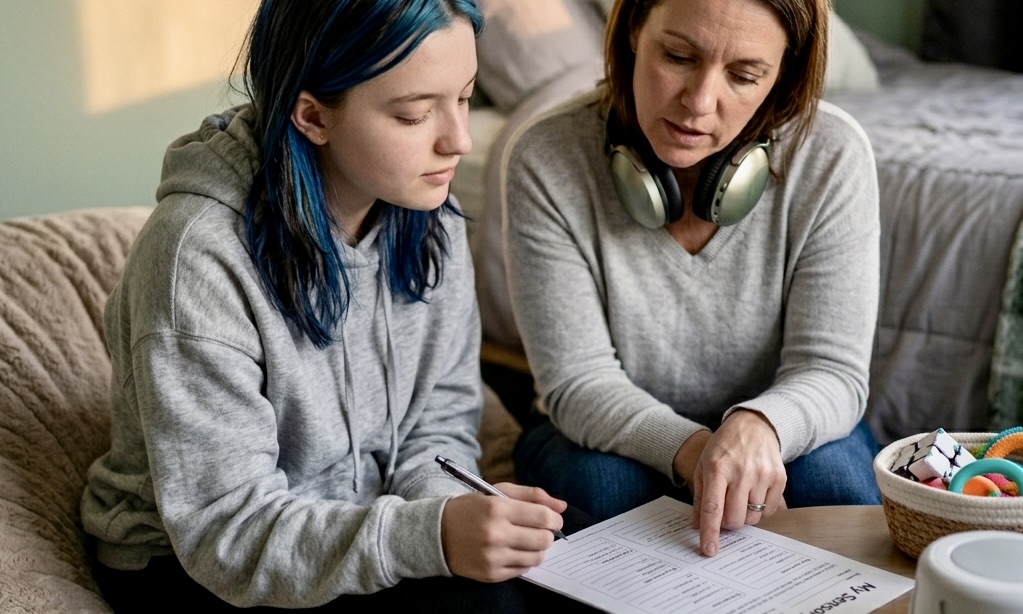
Your teen’s sensory profile: Learning what helps them feel okay
The worksheet below is designed to be a collaborative tool. Instead of guessing what bothers your teen, sit down with them and discuss. This helps them build self-awareness and gives you a roadmap for customizing their sensory space.
Before building this space, identify your teen’s triggers (things that fill their stress cup) and your glimmers (things that help empty it). The following lists are things to consider.
1. Sight (visuals)
- Triggers: Overhead fluorescent lights, messy rooms, bright sun, flashing screens, too many people moving at once.
- Glimmers: Dim lamps, LED color strips, blackout curtains, lava lamps, weighted eye masks.
- Notes: _________________________________________________________
2. Sound (auditory)
- Triggers: Ticking clocks, chewing sounds, muffled TV noise from another room, sudden loud bangs, high-pitched humming.
- Glimmers: Noise-canceling headphones, brown noise (deeper than white noise), lo-fi beats, total silence, heavy rain sounds.
- Notes: _________________________________________________________
3. Touch and pressure (tactile)
- Triggers: Itchy clothing tags, wet textures, light accidental brushes from people, tight waistbands, certain fabrics (like wool).
- Glimmers: Weighted blankets, soft “minky” fabrics, oversized hoodies, squishies, fidget cubes, cold water on the face.
- Notes: _________________________________________________________
4. Movement and space (vestibular/proprioceptive)
- Triggers: Feeling trapped in a crowd, sitting still for too long, spinning, heights.
- Glimmers: Rocking in a chair, pushing against a wall (heavy work), pacing while on the phone, curled up in a ball.
- Notes: _________________________________________________________
5. The safe space blueprint
When I’m overwhelmed, the first thing I want to do is (circle one)
- Hide in the dark
- Listen to loud music
- Move my body
- Squeeze something heavy
One thing I definitely want in my sensory corner is: ______________________
One thing that must STAY OUT of my sensory corner is: _____________________
Note that a teen’s sensory profile can change depending on how tired or stressed they are. What was a glimmer yesterday might be a trigger today if they are experiencing neurodivergent burnout. Use this profile as a living document and update it every few months!
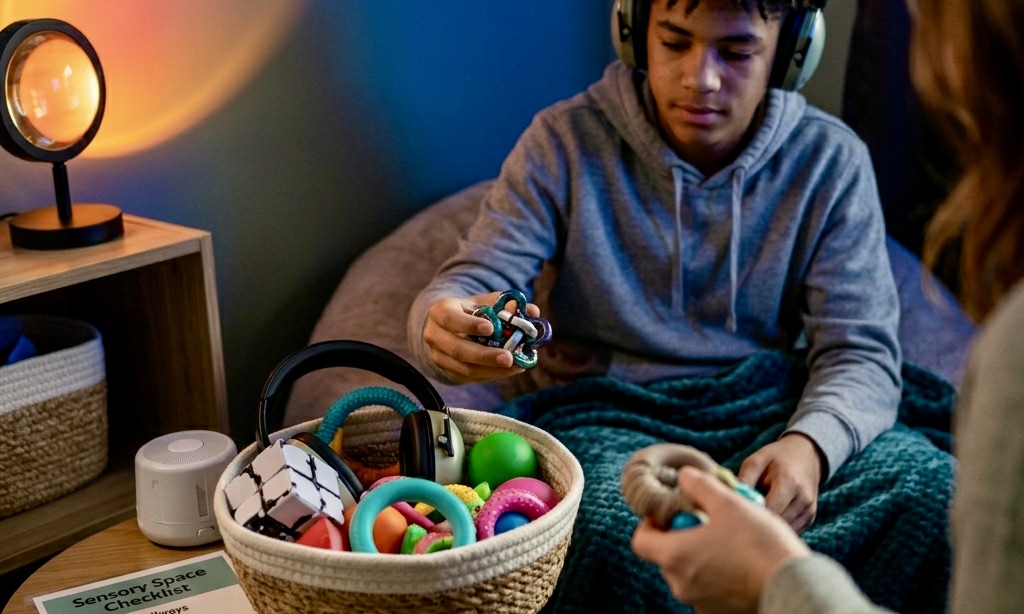
The sensory space shopping list
Once you know your child’s triggers and glimmers, organize their sensory space with these in mind. You can find most needed items at local stores or even repurpose things you already have.
Below is a common starter kit for a teen-friendly sensory space:
- Seating: A bean bag chair, a floor papasan chair, or a large pile of soft floor cushions.
- Lighting: Color-changing LED strips (with a remote) or a sunset lamp.
- Weight: A 10–15 lb weighted blanket or a weighted lap pad.
- Tools: A fidget basket containing infinity cubes, textured sensory strips, or stress balls.
- Sound: A pair of over-ear noise-canceling headphones or a simple white noise machine.
- Privacy: A pop-up bed tent or a decorative room divider if the space is in a shared room.

When a sensory space isn’t enough
Creating a sensory-friendly bedroom or a dedicated calm corner is a wonderful first step in supporting your teen’s mental health. It provides a sanctuary where they can stop masking and start healing.
However, sometimes the level of burnout or sensory exhaustion is too high for a home environment to fix on its own.
If your teen is experiencing frequent shutdowns, severe school refusal, or high levels of anxiety despite your best efforts to support them at home, they may need a more structured “nest” to help them recover.
At Avery’s House, we developed The Nest, a specialized neurodivergent treatment program. It is designed specifically for teens whose nervous systems are stuck in a state of high alert.
We don’t try to change who the teen is. We change how they interact with their environment so they can feel capable and confident again.
We’re here to help your family breathe again
Supporting a neurodivergent teen is a journey that requires a lot of patience and a lot of grace. Building a sensory space is a powerful way to show your teen that you see their struggle and that their comfort matters.
If you’re feeling overwhelmed or aren’t sure how to help your teen navigate the world, you don’t have to figure it out alone.
Contact Avery’s House today to talk with someone who understands the neurodivergent experience. Whether you just need more resources or are looking for a program that truly gets your child, we’re here to support your whole family.
